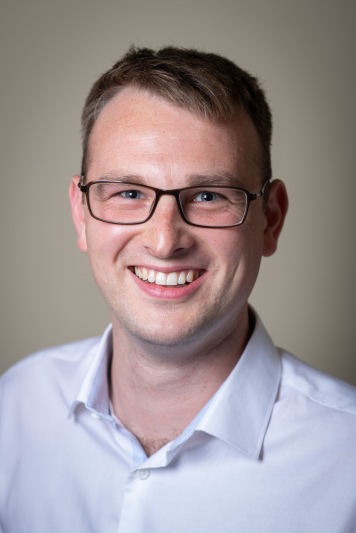
 I’m a Lecturer in Modern Literature at the University of Leicester. My teaching and research is mainly concerned with the history and theory of the novel in English from the 19th century to the present day. I’m particularly interested in how novelists’ techniques for representing thoughts, emotions, and physical sensations have evolved over the history of the form in dialogue with changing cultural ideas about human experience. I also write about the history of literary criticism and contemporary methods for studying literature. Beyond academia, I review contemporary fiction on a freelance basis for public outlets such as the Financial Times and the TLS.
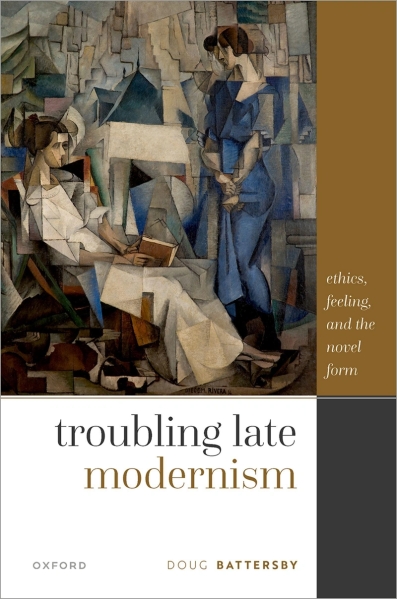
My first book, Troubling Late Modernism: Ethics, Feeling, and the Novel Form (Oxford UP, 2022), examines how novelists in the postwar period at once extend and profoundly trouble modernism’s signature narrative techniques. I show how Vladimir Nabokov, Samuel Beckett, Toni Morrison, John Banville, J. M. Coetzee, and Eimear McBride self-consciously exploit the potential for modernist forms of narration to place readers too close to the experiences of protagonists compelled by perverse or exploitative forms of desire. Whilst other historians of the novel have characterised late modernism’s formal innovations as ethically and politically edifying, Troubling Late Modernism highlights their more disquieting potential for lending sympathy and profundity to sentiments deemed inadmissible in our everyday lives. Troubling Late Modernism was a finalist for the MSA (Modernist Studies Association) First Book Prize and the University English Book Prize.
I am currently completing my second monograph, Cardiac Realism: The Affective Life of the Modern Novel (under contract with Oxford UP). The book tracks a tradition of English novelists writing from the 1840s to the 1920s who each turn to the heart to contend with one of the great philosophical challenges of the novel form: How can prose fiction put the physicality of feeling into words? Drawing on both contemporary and historical understandings of emotion and the body, Cardiac Realism examines the heart-centred strategies of affective description that the novels of Charlotte Brontë, Thomas Hardy, May Sinclair, and D. H. Lawrence mobilise to capture the somatic intensity of lived experience. It argues that critical histories of nineteenth century realism and its evolution into early twentieth century modernism are yet to grasp the full experiential range of the modern novel.
I am in the early stages of a new book project with the working title Free Indirect Style: The Philosophy of a Form. An article drawing on some of my preliminary research, “Free Indirect Style and the English Novel: Literary History and Critical Pleasure,” is forthcoming with PMLA.
Before joining Leicester in 2024, I held visiting and postdoctoral fellowships at the universities of Bristol, Columbia, Sydney, Stanford, and Tokyo. I gained my PhD from the University of York (UK) in 2018, after studying at Leeds, UCL, and Trinity College Dublin.
Photo©Steve Forrest/Workers’ Photos
 Doug Battersby